+91-9819957779
admin@saptarishisastrology.com
Gallery
Forum

Menu
Categories
- Shizuko Yamamoto
- Consultation by Sunil John
- Rupa Publications
- Astrology Books
- Children And Astrology
- Panchang
- Astrology Webinar
- Medical Astrology
- Bhrighu Astrology
- Vastu Consultation
- Devdutt Pattanaik
- Palmistry
- Pooja Paath
- Other Useful Books
- authentic rudrakshas
- Career and Astrology
- Astrology
- Yogas In Astrology
- Lal Kitab Consultation
- Timing Of Events
- Remedies
- Meditation and yoga
- Holy and Divine Products
- Sterling Publishers
- A. R. Hari
- Online Consultation via Zoom
- Author: Ramesh Menon
- Authors
- DA Negandhi
- S S Gola
- KSR Prasad
- DR. NARESH JHA
- Dr. Brijbihari Nigam
- Pandit_sri_achyutananda_jha
- Dr.K.GURU RAJESH
- T.P Trivedi
- Dr E S Neelakantan
- Neelam Gupta
- Ramesh Kumar
- H.K Thite
- K.C Vats
- PT. MUKUNDVALLABH MISHRA
- AMRITA PRITAM
- Nishantketu
- ISHWARI PRASAD PANDEY
- GEETA JOSHI
- Guneeta Dhingra
- APARNAA N RAJE
- U Suman Lathaa Metha
- A.R.Hari
- VAIDYA MOOLCHAND BHARDWAJ
- Padmanabha Sharma
- Rekhaa Kale
- R.N. Vyas
- Prabodhchandra Madhukar
- Shri Datta Raj
- N. Singh Dahiya
- U.K JHA
- DR. N. RAMAMURTHY
- PT. LASANALAL JHA
- Bepin Behari
- Pramod Kothari
- SURYA NARYANA VYAS
- ANURAG MATHUR
- Vasudeo Govind Apte
- R. Verma
- J. Sithamparanathan
- PT. BASTIRAMJI
- Vaidya Suresh Chaturvedi
- Dr S.R Jindal
- DINA NATH
- Pdt. Gyankunsh Kaushik Ji
- Dr. Nimai Banerjee
- Shri Vishnu K Acharya
- H.A. Padmini
- Govind Shashtri
- Alan Leo
- Sita Ram Singh
- Shailja Pandey
- Deepak Kapoor
- SAMPATH KUMAR MEDAVARAPU
- ER. P.L. KHUSHU
- Charubel
- K.S. RAMAKRISHNA AIYAR
- PARMANAND SHARMA
- Light Miller
- R. K. Madhukar
- Mahesh Dutt Sharma
- PT. SHRI RAVIDATTA
- Peter Newton
- Amit Abraham
- NAVNEET KAUSHIK
- Paul Bruntan
- Pramod Sagar
- SHANKAR BHAROSA JHA
- Prem Dixit
- MAHAYOGI PILOT BABA
- Dr. Gauri Shankar Kapoor
- A Mahadeva Sastri
- Girish Chandra Joshi
- Dr. A. V. Mohandas
- Kanta Gupta
- C.A. SUBRAMANIA AIYAR
- S K DUGGAL
- Dr. Hanif Khan Shastri
- ADAMUIR
- Vishnu Dass
- Dennis M. Harness
- B.D. Sharma
- PT. SHALAGRAM JYOTISH
- SRI BHARATI KRSNA TIRTHAJI MAHARAJA
- Rajiv Sachdev
- Upendra Dhakre
- Himanshu Shangari
- JAYANTA BHAUMIK
- DR. DURGADUTT MISHRA
- ACHARYA VIJAY ANAND 'LOHAT'
- Lokmani Dahal
- Anantha Sharma
- Atul Sehgal
- Om Swami
- Sachchida Nand Mishra
- Piyush jen
- B. Hariharan
- DR. V.P. SHUKLA
- Diwakar Shastri
- Shalini Dhasmana
- Dr. Sou. Achala Bhimsenkulkarni
- Mohan Srinivasan
- WILLIAM GEORGE BENHAM
- Bruno Dagens
- C. E. Lindgren
- Grehlakshmi
- Niketan Anand Gaur
- Pt. Ram Swarup Shastri
- SOUMYA KUMAR
- Umesh Pandey
- SHRI SHYAMSUNDAR
- K. SUBRAMANIAM
- kaali Pandit
- Shiraz
- SHRI YUTARAMA SHARMA
- Devdatt Patt
- O.P. Verma
- M G Kastwar
- C.J. Krishnaswami
- Amanish Kumar
- MAHAN VIR TULLI
- Shiv Raj Sharma
- Rachna Bhola
- SHAILENDRA SHARMA
- Bryan Miller
- HARISH CHANDRA GAUTAM
- B.B. Paliwal
- JAYANT BURDE
- Dr. Brij Bhushan Goyal
- R. KRISHNA
- Suresh Shrimali
- Dr. K N Saraswathy
- Hemant Bhatt
- SHRI KIRIT 'BHAI JI
- Dr. Gaurishankar Kapoor
- Suhas Dongre
- Birendra Nautiyal
- A V Mohandas
- S B R mishr
- DINESH S. MATHUR
- QAISER HUSSAIN
- Pt. Venimadhav Goswami
- JUDE C. WILLIAMS
- Shantree Kacera
- Dr.Styapal Duggal
- Frank Arjava Petter
- SHRI RAMSWARUP
- Vandana Singhal
- A B Shukla
- DIMPLE
- A.P. VELAYUDHAN
- Surendra Kumar Patawari
- Raj Kumar Aggarwal
- S.S. CHATTERJEE
- DR. RAMESHWAR PRASAD SHARMA
- SHRI KAMAL KANT SHUKLA
- MADHUSUDAN SHARMA
- Ed. Heron Allen Henry Frith
- Mithalal Himatram Ojha
- Rameshwar Sharma
- K N RAO
- DR. SATISH CHANDAR AGARWAL
- K. GURU RAJESH
- DR. SATYENDRA MISHRA
- Dr. Ravi Rao's
- Dr. Sou. Achala Kulkarni
- Anita Mathur
- TULSI RAM SWAMI
- David Pond
- Vinay Singhal
- SWAMI VENKATESANANDA
- SHRI VANSHIDHARA
- Ashwini Kumar
- Naresh Singal
- Vagaram Parihar
- BALDEV PRASAD MISHRA
- K S Krishnamurti
- Paramhansa Yogananda
- Pt Gopal Dev Gaur Shastri
- Manik Chand Jain
- PT. GANGA PRASAD
- Akhila Kumar
- JAGDISH RAJ RATRA
- DR. BHOJRAJ DWIVEDI
- BRIJBHUSHAN LAL
- Meta B. Doherty
- P.V.R. RAYUDU
- Mahesh Sharma
- AYODHYA PRASAD SHARMANA
- Hiroshi Motoyama
- RAJEEV JHANJI
- DR. RAJEEV SHARMA
- VAYUNANDAN MISHRA
- B. ARDHANAREESWARAN
- Thilak K.Baskaran
- Kanakkumar B. Bosmia
- SHASHIKANT OAK
- S.D. Udhrayan
- kirtidutta jha
- Dr. Indra Dev Tripathi
- K.K Pathak
- VS Kalyanraman
- Girija Shankar Shastri
- Neera Sawhney Chopra
- Shri Kapileshwar Shastriana
- R. SANTHANAM
- Maya Gupta
- Irangati Rangacharya
- UMA SHANKAR PALIWAL
- Devkinandan Singh
- Joyce Bueker
- USHA SAXENA
- Bhagwan Dev
- SHYAMLAL
- Richard Tunis
- RAKKHI SAMEER
- Madhivanan
- Neela R Gopal
- ACHARYA BHAGWAN SWAROOP VYAS
- DR. D.D. PANSE
- JAYDEEP YADAV
- Wally Krause
- Sun TZU
- T. GANPATI SHASTRI
- (Pt. Srimatra Prasad Pandey
- V.P. Jain
- K. NARAYANASWAMI AIYER
- Surakant Jha
- Prakhar Prajnanand Saraswati
- D. P. SAXENA
- M.K VISHWANATH NAYAR
- S.K. Anil
- Ridhhi Kapoor
- SAGE SATYACHARYA
- Jhampa Shaneman
- Rachel Fell Mcdermott
- B.R. Kishore
- VIRENDRA NATH SHARAMA
- SHRI MEGHARAJ
- N. H. Sahasrabudhe
- Bharat Singal
- PT. SUKHANAND MISHRA
- Dr. S.C. Kursija
- MADAN MOHAN JOSHI
- R.P. Birthare
- Narayan Dutt Shrimali
- Srinivasa Sharma
- (JAGJIVANDAS GUPT)
- V. S. Sastri
- Dr. Nemani Venkata Raghunatha Rao
- Jitendra Trivedi
- DR. K V PRATAP KUMAR
- Asha Wollmann
- MAHENDER SINGH RANA
- SHARDENDU
- Gopesh kumar Ojha
- Maya Tiwari
- Stephen H. Wolinsky
- Upadhayay Rajni Kant
- Pt. Narayan Prasad Mishra
- Madame La Roux
- Gautami N Sahasrabuddhe
- R.K. Baqaya
- Saket Shah
- Sunita Upadhyay
- BADRI NARAYAN TRIPATHI
- Joan McEevers
- PT. RAMESH DWIVEDI
- Tanya Malhotra
- Acharya Bhaskaranand Lohani
- Dr. M N Muley
- Raj Kumar
- SOHANLAL VAYAS
- Suresh Chandra Mishra
- S.G. KHOT
- S.S SAREEN
- MUKUNDA DAIVAJNA
- L.C. Sharma
- Brajbiharilal Sharma
- Arthur Lytle
- Richard A. jelusich
- Shri Rajani Kant Shastri
- Rama Jyoti Vernon
- Kuldeep Jiwani
- Sonica Krishnan
- SUDHAKAR PUROHIT
- Priti Wonder
- S. Narayan Datt Shree Mali
- YOGESH MALHOTRA
- Somnath
- Michael George Reccia
- Pt. Kanhaiya Lal Mishr
- Sadhguru
- PROF. KAUSHLENDRA PANDEY
- Ramtej Pandey
- S.K. Kapoor
- RAMAMURTHY N
- Shivakant Jha
- SHATRUGHAN TRIPATHI
- Prabodh Purohit
- R.G RAO
- K.T. SHUBHAKARAN
- jyotis shirmani
- AMJAD ALI
- Mukund Daivagya
- Kedardutt Joshi
- M. RAMAKRISHNA BHAT
- Manish Verma
- JAIDEVA SINGH
- SHRI CHATURTHI LAL SHARMANA
- J. P. Vaswani
- T S VASAN
- Shri Hanuman Sharma
- Ravinder Nath Prasad Singh
- Nemichandra Shastri
- Vedic Scripture
- RAGHVENDRA SHARMA
- Vraj Vallabh Dwivedi
- Vighnesh Radhakrishna
- Dr. Kiran Manocha
- KARAN K. MAHAJAN
- Anuradha Sharda
- R.K. Das
- DINESHCHANDRA NEGANDHI
- Zuisei Yokoyama
- Prash Trivedi
- Dr. E. Saravanan
- Hardev Sharma Trivedi
- Tarashankar Vaidh
- Arastu Prabhakar
- PT. LAXMI NARAYAN
- Franz Benedikter
- Taoshobuddha
- Pinky Kapoor
- Acharya Ashutosh Bhardwaj
- ANIL G
- SHIVDUTT MISHRA SHASTRI
- PT. Rajesh Dixit
- Shri Manishankar Ashutosh Ji
- Rajesh Tiwari
- Shakti Mohan Singh
- Subas Rai
- Prof.K.M.PALANIAPPAN
- DR MANOJ KUMAR
- B. SURYANARAIN RAO
- S P Khullar
- Shukdev Chaturvedi
- K.K. JOSHI
- OM PRAKASH PALIWAL
- V. RAJSUSHILA
- Roop Chand Joshi
- Jaidev Vidyalankar
- LATA JAGTIANI
- Radhakrishan Shrimali
- Rajinder Singh
- SHRI SHAMBHU SINGH
- Yaschpaule
- Devdutt Pattanaik
- SUDARSHAN SINGH 'CHAKRA
- BALWYN & JONES
- ASHUTOSH BAJPAI
- Rajendernath Mishra
- V.K Shridhar
- TMJKASHIRAM
- Dr. Shrikant Tiwari
- Ramchandra Pandey
- S. Ganesh
- M N Muley
- Maharishi Abhaya Katyayan
- Sri A. V. Sundaram
- GOURI SHANKAR KAPOOR
- N. SRINIVASAN SHASTRY
- V.K.Choudhry
- S. GOPALAKRISHNAN
- GANGA PRASHAD SHASTRI
- STEPHEN ARROYO
- DR. B.B. SAHI
- Kailash Nath Seth
- Dora Van Gelder Kunz
- CHATURTHI LAL PRAKASH
- SRI KRISHNA DAS
- Pradeep Kumar
- GBS SASTRY
- RAVI DATT SHASTRI RAJ VAIDH
- Rajesh Sharma
- NVR Raja
- Challa Soma Sundaram
- PT. SHAKTIMOHAN SHRIMALI
- S.A. Jedi
- Punit Sharma
- Ramesh Tanbe
- Dr. Sushil Agarwal
- MAINA BHATNAGAR
- Satyamma Bharadwaj
- SHANKER ADAWAL
- Shil Ponde
- Anuj Guliani
- N.S. Dahiya
- B. V. RAMAN
- VAIDY SUBHASH CHANDRA
- Dr. Radheyshyam Mishr 'Paramhans
- Acharya Satyanand
- Pt. Mahidhar
- SVAMI PURNA
- Swami Vidyanand
- Prashant Kapoor
- JAY YADAV
- VIKRAM DIVAKAR
- Sitaram Jha
- Kernel Ashok Kumar Gaur
- Daya Shanker
- Kali Pandit
- Hemant Titirmare
- Dr. ramragna Sharma
- Dr. R.P. Upadhyay
- Vinod Kumar
- V SUBRAHMANYA SASTRI
- Mahamahopadhyaya Iranganti Ranga Charya
- Dr.Kulanand Jha
- K. ASHU RAO
- MANINDER SINGH BATRA
- Ranjan
- Acharaya Mithilesh Gupta
- M. M. Gore
- Babu Lal Thakur
- V.K Sharma
- Robert E. Svoboda
- SHRI SHUKDEV
- P.J.SAHER
- S.N KAPOOR
- P. Khurrana
- DR. SURESH KUMAR SHARMA
- Chanakya Maharishi
- U.C.Mahajan
- SURESH TANWAR
- U.N. Patnaik
- Vinay Kumar Pandey
- RAJ KISHOR VISHAVAKARMA)
- SHRI RAM SHASTRI
- R. C. Dadhwal
- Ajay Kumar Uttam
- Shri Sarvadev
- Dr. U.S Pulippani
- Satyendra Mishra
- SHRI ABHAY KATYAYAN
- Shivraj Acharya
- P.S SHASTRI
- GIRISH CHAND SHARMA
- Krishan Rajesh Chaudhary
- N. KALIMUTHU
- TRILOKI NATH
- A.H.W. Sameer
- Christopher S. Hyatt
- Hugh B. Urban
- Jess E. Dines
- AMIT KASHYAP
- J.N. Sharma
- A R Raichur
- Talma Brill
- Dr. Neeraj lalwani
- VISHNU SHARMA
- Dr. R.K. Sharma
- N C Jain
- V.P.Jain
- Dr. Shankar Dutt Pandey
- C B Narnauli
- Harishankar Pathak
- Shri R.K. Das
- Vidhan Pandya
- RAJESH C. DADWAL
- GRACE INGLIS
- SHIV KUMAR CHADHA
- Jay Madan
- PT. KASHINATH SHASTRI
- N. C. PANDA
- DYANAND VERMA
- RAMAL SHASTRI
- PT. RUDRAMANI
- Vaidya Aasiya Rizvi
- N. ANANTHA RAMAN
- DR. BHUWAN MOHAN
- SOUNDAR DIVAKAR
- DYASHANKAR UPADHYAYA
- Pravin S. R. Bhatia
- Seema Verma
- PK Vasudev
- Pt. Siyaram Shastri
- Madhavacharya
- Vishnu Bhaskar
- N.P. SUBRAMONIA IYER
- Achyutanand Jha
- Satyanarayana Naik
- Balmukund Pandey
- G.S. AGGARWAL
- R.S Chillar
- K.B. GOPALAKRISHNAN
- Cheiro
- CHANDRA DUTT PANT
- Bharati Krishna Tirthaji Maharaja
- B.K. Chaturvedi
- Judith Hipskind
- SHRI NANDARAM PANDIT
- Savitri Ramaiah
- Vikaas Budhwaar
- C. P. Arora
- Sarajit Poddar
- Ravi R Naik
- TOM MONTE
- LAKE RAJ DWIVEDI
- Amarchand Kaushik
- Acharya Vivek Kaishik
- Swami Chinmayananda
- VASTIRAM
- Eknath Easwaran
- DR. NARWADESHAWAR TIWARI
- S. N. Khandelwal
- Govindo Sri RamaMurti Rao
- SIR JOHN WOODROFFE
- ACHARYA GURU PRASAD GAUD
- Alok Jagawat
- Varahamihira
- SANJAY RATH
- Neerja Taneja
- JAGAT GURU AAGH SHANKARACHARYA
- Lyn Birkbeck
- Susan G. Shumsky
- Kuldeep Saluja
- S. Jason Black
- PT. VISHNU DATTA
- Rajeev Sachdev
- V Raghuraman
- Sunil John
- S Balasundaram
- Acharya Ashok Sahjanand
- Vasudev Sadashiv
- Umesh Prasad Mishra
- Rraghavendra Saatvik
- Krishna Kumar
- Sunita Jha
- Satyadev Sharma
- Nakkirar S.Natarajan
- Dr. Jagannath Rao
- Dr.Shanker Adawal
- Ravindra Kumar
- Murlidhar Chaturvedi
- Anneke Huyser
- NISHA GHAI
- PT. REWASHANKAR
- B.B. PURI
- Nilesh Baxi
- A. KARTHIK
- DR. DEEPAK SINGLA
- SETHUMADHAVAN VENKATRAO
- RAJNARAYAN SHASTRI
- DR. SHYAM PARASHAR
- Manoj Pathak
- Ramkishor Sharma
- Grant Lewi
- SNEH LATA
- Kunwarlal Jain
- R. Asthana
- P.M. GOPALACHARY
- CS Patel
- RAMYATAN OJHA
- Harishchandra Vidyalankar
- CHANDER BHALLA
- BENI MADHAV GOSWAMI
- Priya Singh
- Dr Abhimantra
- ASHUTOSH OJHA
- Bodo J. Baginski
- Dayanand Verma
- Dietmar Kraemer
- RAGHUNANDAN SHARMA
- GYOMAYO NAKAMURA
- PREM KUMAR SHARMA
- Khemraj Shri krishnadas
- Santosh Sharma
- HANS DECOZ
- SANJEEV GADHOK
- NAVIKANTA JHA
- Swami Mukundananda
- Sadhvi Vrinda Om
- Dr. Rajbeer Singh
- Shri Ram Gopal Goswami ji
- Umang Taneja
- A.K Gour
- K. NARAYANAN
- Kamalkant Panday
- Chandrashekher Sharma
- Sage Gargacharya
- SUMEET CHUGH
- N. N. Saha
- Andree Leclerc
- NIMMI ARORA
- USHA LAD
- KAULACHARYA JAGDISH SHARMA
- K. Jaya Sekhar
- Neeraj Gupta
- Prem Bhatia
- P.K. SARNA
- Dr. Radhakrishna Shrimali
- Dinesh Vyas
- ABHINAV MISHRA
- RAMESHWAR CHANDRA SHASTRI
- DR. CHANDRAMOHAN JHA
- Shivesh Prasad Mishra
- Vikash Sharma
- G.V. Prabhakara Murthyc
- Pt. Kisanlal Sharma
- Brahamananda Tripathi
- V.P. GOEL
- Meenakshi Priyadarshini
- ASHISH GUJRAL
- Pradeep Bhushan Goel
- Pawan Ballabh Thapliyal
- Dharmadatt Vaidh
- Amadea Morningstar
- Heinrich Zimmer
- GOPAL SHARMA
- PT. TARACHANDRA
- RAM LAL SHAH
- C. H. Asrani
- HARISH JOHARI
- Shristi Sahoo
- Partha Sarathi Rout
- SHRI RADHARAMAN 'SUMAN
- DR. NEERAJ PANDEY 'DADA'
- Deepak Bisaria
- Dr. Challa Somasundaram
- Howard Beckman
- Lalitha V
- Pandit Shri Kamlakant Thakur
- Madhav Janardan Ratate
- M.S. Mehta
- DR. R. NATARAJAN
- Satish K. Navathe
- Jagannath Bhasin
- JATINDER PAL SINGH SANDHU
- LAXMI KANT VASHISTH
- Dr. Uday Kant Misra
- Acharya Bhawna Bhatiya
- GAYATRI DEVI VASUDEV
- Shalila Sharamon
- Gopal Das Neeraj
- John E. Coleman
- RAMESHWAR BHATTA
- Vijaya Kumar
- Bukkyo Dendo Kyonkai
- SHRI RAMCHANDR
- Rakesh Soni
- Tilak Chand Tilak
- Pandit Pannalal Jyotishi
- Siddhayogi Sivadasan Ravi
- PT. LASHANLAL JHA
- K.P. KRISHMAN’S
- Thich Nhat Hanh
- Pt. Ramjilal Gaur
- R. SELVAM
- Yogesh Kumar Bansal
- Hemant Kumar Sharma
- Dr. Revathi Vee Kumar
- Deepak Bhardwaj
- M.K. AGARWAL
- DR. SHANKER ADAWAL
- VASANT LAD
- Vivekshri Kaushik Vishvamitra
- MOHAN BHAI D. PATEL
- Dr. N.H.Sahasrabuddhe
- BANSI PANDIT
- Bryson
- Sawan
- Idea Baba
- Durga Prasad Shukl
- GIRIJASHANKAR SHASTRI
- Dr. Amar Aggarwal
- Dr Amar Agarwal
- Mridula Trivedi
- N E MUTHUSWAMY
- Shri Vindheshwari Prasad Dwivedi
- Joni Patry
- Ashwini Baqaya
- Naval Singh
- ASHOK BHATIA
- S.S Dahiya
- Samprasad Vinod
- ATREYA
- Joseph Campbell
- SEVARAM JAIPURIA
- SHRI KASHIRAM
- BINOD KUMAR JOSHI
- Ramesh Vash
- B.K.S. Iyenger
- S. Prakash
- Shri Bhagavatananda Guru
- MANDAN SUTRADHAR
- MAHARSHI YATINDRA
- PROF. MRIDULA TRIPATHI
- Tirpur S. Gopalkrishnan
- Onkar Lal Sharma `pramad`
- Chandrashekhar Mishra
- Pandit Shivprasad Sharma
- Z. Ansari
- V. S. KALYANRAMAN
- E. S. B. R. MISHRA
- LR Chawdhri
- M. H. K. Shastri
- Baby Krishna
- RUDRADEVI TRIPATHI
- David Frawley
- JAMES T. GLOVER
- Rajbali Pandey
- E Rameshwar Prasad
- JWALA PRASAD MISHRA
- Paramahansa Yogananda
- M. ANJANEYULU
- BIJOYLAXMI HOTA
- P. MAHIDHAR SHARMA
- K Hariharan
- Rajendar Menen
- Sri M.P. Shanmugam
- Mahrishi Bhrigu
- Sudhir Kove
- SHRIKRISHNA 'JUGNU
- p khurran
- Dr M.H.K. Shastri
- Vivekshri Kaushik Vishavamitra
- N. CHIDAMBARAMIYER
- KUSUM VASHIST
- Shrimdhukanta Jha
- Rajbir Singh
- Hemant Thakorbhai Bhatt
- Indrodeep Banerjee
- P. L. KHUSHU
- RAMA KRISHNA GOYAL
- Sunil V. Joshi
- PT. KRISHAN ASHANT
- Kaulacharya Jagdishanand Tirth
- anhavi N. Sahasrabuddhe
- Hart De Fouw
- R. D. MAHATME
- RAMESH CHANDRA SHRIVASTAVA
- C. M. Srivastava
- Mohan Kumar Kashyap
- Dr. K S Charak
- Vaidya Suresh Chaturvedi
- Suresh chand Mishra
- Astrology Classics
- Paulo Coelho
- Chakravarthi V. Narasimhan
- Birth Time Rectification Books
- Spiritual Events
- Swami Mukundananda
- Faculties
- Tarot Card
- Financial Astrology
- Publications
- Nirogi Duniya
- Krishnamurti Publications
- Kadalangudi Publication
- S.S Gola Publishers
- Sagar Publication
- Rave Publication
- Megh Publication
- KHEMRAJ PUBLICATION
- Master Kheladi Lal Publication
- Thilak Astro Books
- Chaukhambha Sanskrit Bhawan
- Jaico Publication
- Esha Publication
- Rupa Publication
- Notion Press
- Pustak Mahal
- S. KRISHNA KUMAR
- Big Note Publication
- NISHKAAM PEETH
- Alpha Publication
- Deep Publication
- Bharatiya Vidya Prakashan
- Diamond Publication
- Vani Publication
- Nairs Publishers
- RG Rao Publication
- Aggarwal Publication
- ICAS
- VL Media Solution
- Nishkam Peeth
- Saptarishis Publications
- UBSPD Publication
- NVR RAJA PUBLICATIONS
- MLBD Publications
- K. Jaya Sekhar
- Gyan Publication
- Umang Taneja Publication
- Manoj Publication
- PRANAV PUBLICATIONS
- Kojo Press
- Pooja Publication
- Mix Publication
- Shila Lekh Publication
- Sterling Publication
- Kalahasti Publication
- CBH Publication
- Krishman & CO
- D.P.B. Publication
- M.N. Kedar
- Astro Research Centre
- Kanak Bosmia
- Ranjan Publication
- Deepak Kapoor Publication
- Uma Publications
- Astrology Consultation
- Ayurveda
- Vedic Maths
- Dr. NVRA Raja Meena 2 Junior
- Dr. Suresh Chandra Mishra
- Gems and Astrology
- Transit
- Ashtakvarga
- Vedic Jyotish
- Horary Astrology
- Dasha
- Report Consultation
- O.P.VERMA
- Vani Publications
- Astrology Courses
- Marriage Astrology
- Birth Time Rectification
- Crystal
- Surya Kanti Tripathi
- Jaimini Astrology
- Mundane Astrology
- Puja Services
- Vedic Astrology
- Nadi Astrology
- KP Astrology
- Lal Kitab Astrology
- Vastu
- Numerology
- Uncategorized
Wishlist
0
Cart
₹0.00
0
No products in the cart.
Return To Shop
Shopping cart (0)
Subtotal: ₹0.00
Free shipping over 49$
Featured this Week
No products were found matching your selection.
New
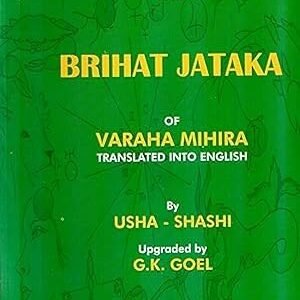
Brihat Jatak Of Varaha Mihira {SP}
The English translation of Varahamihira's Brihat Jataka, the standard text book on astrology, is a monumental work in completing which the difficulties in translating a beautiful, technical and suggestive work in Sanskrit had to surmounted by hard labour, profound research and want of adequate expressions. Brihat Jataka is a great classic of Vedic astrology composed by The Great Varahamihira, who was the famous astrologer in the court of The Great king Vikramaditya in the year 57BC. He was also a great astronomer and the first one to mention in his work Pancha Siddhantika, based on our ancient Siddhantas, that the ayanamsa, or the shifting of the equinox is 50.32 seconds. He also authored the famous Brihat Samhita, Laghu Jataka and Yogayatra. His other famous classic is Daivagya Vallabha, which deals with prashna or horary astrology. Varahamihira's son Pitru Vyasa wrote the famous classic Horasara
![Practical Mundane Astrology [SP]](https://saptarishisshop.com/wp-content/uploads/2024/09/e44fc179-ef77-4a55-a68e-0591cfb89e68-300x300.jpeg)
Practical Mundane Astrology [SP]
It deals with the rudimentaries of the Science and gives in great detail mundane significations (including those even remotely connected) of Planets, Houses, Signs & Constellations and can be safely depended upon as a ready reckoner, to confirm the significations when in doubt, in the course of making predictions.
English 386About the BookThis is the first ever book written exhaustively on Mundane astrology, based on the Hindu system of Astrology. Indeed very few books exist on this subjects & these few have been written mainly by the Western Astrologers, using tropical system.The uniqueness of the book lies in the fact that it has been written exhaustively & contains apart from all the know methods of interpretation of a Mundane Chat, new clues to make the predictions precise &correct. The author labored hard for many years making research and collecting material for the book, from whatever source he could lay his hands on although the source were few and far between. He has however succeeded to a very great extant, in presenting the research material is such a manner that the reader will feel confident in arriving at correct judgement, after using the clues & information given in various chapters.The book has been devided into 11chaptersThe first chapter gives Principles of Judgement in a very detailed manner and the 2nd chapter provides such vast & exhaustive information about the results of planets’ location the 12Houses that an intelligent reader can, by using this material alone, make correct predictions with confidence. The 3rd chapter gives results of 15 sets of conjunctions of planets which is an additional tool for making correct predictions. The 4th Chapter deals with transits of plants & can be used to visulise years in advance, the coming events-good or bad. The 5th chapter on Eclipses is very important & enables one to foresee the likely happenings including deaths of the rulers, wars, earthquakes, etc. The 6th chapter on Comets gives information about the events relating to ruler, kingdoms

![Rahu Dasa A Guide To Thrive [SP]](https://saptarishisshop.com/wp-content/uploads/2024/09/b9ace3b2-e5b2-447f-a118-2cf548a0d981-300x300.jpeg)
Rahu Dasa A Guide To Thrive [SP]
Rahu is the northern lunar node that times the eclipse of the Sun and Moon. It blocks the light but also helps you see beyond and evolve. Western astrologers view it in a more positive light, but it is also your biggest block according to Vedic astrologers. It is both the block and the release, the darkness that leads to the light. Part journal, part guide, Rāhu Daśā explores themes and experiences of Rahu's eighteen-year period, one of the nine used in Vedic astrology to time events in your life. It helps you digest what would otherwise prevent you from achieving your soul's desire, guiding you in how to live authentically.
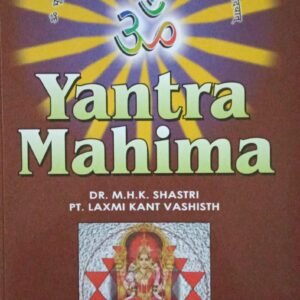
Yantra Mahiam {SP}
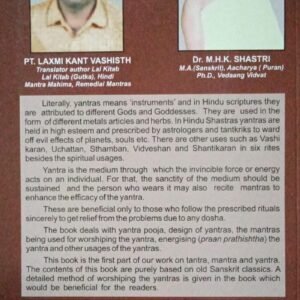
Literally, yantras means 'instruments' and in Hindu scriptures they are attributed to different Gods and Goddesses. They are used in the form of different metals articles and herbs. In Hindu Shastras yantras are held in high esteem and prescribed by astrologers and tantkriks to ward off evil effects of planets, souls etc. there are other uses such as Vashi karan, Uchattan, Sthamban, Vidveshan and Shantikaran in six rites besides the spiritual usages. Yantra is the medium through which the invincible force or energy acts on an individual. For that, the sanctity of the medium should be sustained and the person who wears it may also recite mantras to enhance the efficacy to the yantra. These are beneficial only to those who follow the prescribed rituals sincerely to get relief from the problems due to any dosha. The book deals with yantra pooja, design on yantras, the mantras being used for worshiping the yantra, energizing (praan prathishtha) the yantra and other usages of the yantras. This book is the first part of our work on tantra, mantra and yantra. The contents of this book are purely based on old Sanskrit classics. A detailed method of worshiping the yantras is given in the book which would be beneficial for the readers.
New

Practical Prashna Paddhati: Sunil John द्वारा हिंदी में प्रश्न ज्योतिष Level – 1
Sunil John द्वारा हिंदी में प्रश्न ज्योतिष Practical Prashna Paddhati Course Level - 1
Trainer: Sunil John
Start Date: 20 Feb 2025
Time: 7:30 PM IST (Thursday)
Duration: 6 Months
Language: Hindi
Fees Details:
- Option 1: One-Time Fees: Rs 42000 – PAY IN INR & PAY IN USD
- Option 2: For EMI Rs 14997/Three-Months Each (Quarterly) – PAY IN INR & PAY IN USD
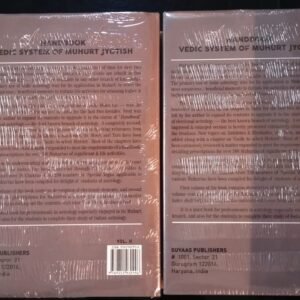
![Hindu Electional Astrology Part 1 & 2 [Suvaas]](https://saptarishisshop.com/wp-content/uploads/2024/09/3df891a4-9420-4ee7-8290-f73d29c5e589-1-300x300.jpeg)
Hindu Electional Astrology Part 1 & 2 [Suvaas]
THIS BOOK HAS BEEN AWARDED AS THE LONGEST BOOK ON ANY SUBJECT OF ASTROLOGY by India Book of Records. It is the first “HAND BOOK” of Electional Astrology --- Hindu System of Muhurt Jyotish --- for the delight of the students of astrology. Its first edition of 2002, a 'compendium' on Muhurt Jyotish was the bestseller book in India on the subject for the two decades. Muhurt (Muhurtha / election) is the best known branch of Vedic / Indian astrology which has prescriptive, preventive and predictive ingredients built into it. Electional astrology guides an aspirant about one of the best-time to initiate life-activities as well as activities of routine nature, assuring successful results. In the present second edition of the book, chapters on Antidotes & Blockades, Tara, The Moon and Guide to select Muhurt have been added; and most of the chapters have been revised extensively giving references of aphorisms from the treatises. Application of “SWAR SHAASTRA” in Muhurt, prediction, Horary & health has been dilated in length. In the chapter on ‘Guide to select Muhurt’ detailed guidelines have been given on mode to prepare elections of different significances. For ease in understanding and to facilitate in preparing elections with lesser computations, the matter has been illustrated through 450 numbers of tables & diagrams, and over 50 Chakras. Over 230 numbers of ‘Special Muhurt Yogas’ applicable especially to various Muhurtas have been compiled for delight of students of astrology. First volume of the book contains principles & description of electional elements; and second volume contains prescriptions for over 300 Muhurtas of significant & life activities & Astrological Database. Exhaustive index contained in 51 pages shall help in culling out the contents with ease from the voluminous book of 1609 pages. A MUST BOOK FOR PROFESSIONALS DEALING WITH MUHURT / MUHURTHA AND THOSE ENGAGED IN ADVANCED STUDY OF ASTROLOGY.
Aagami Grah – Guru Purnima Webinar 2024
Aagami Grah - A Rare Exploration into the Celestial Influence
Speaker: Jyothi Shivani
Event: Guru Purnima Webinar 2024
Mode: Recorded Course
New
Laghu Parashari with Jataka Chandrika [SP]
₹275.00
Book Name: Laghu Parashari with Jataka Chandrika
- Language: English
- Paperback: 279 pages
- ISBN-10: 8170822408
- ISBN-13: 978-8170822400
- Item Weight: 450 g
- Size: 21.59 x 13.97 x 1.52 cm
- Country of Origin: India
New
![Yantra Mahima[SP]](https://saptarishisshop.com/wp-content/uploads/2024/09/d71cb055-ac1b-4c32-96de-4789738c28e0-300x300.jpeg)
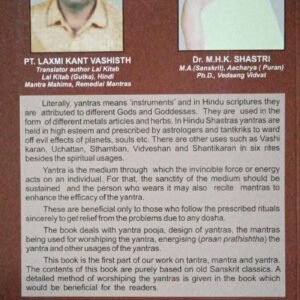
Yantra Mahima[SP]
Literally, yantras means ‘instruments’ and in Hindu scriptures they are attributed to different Gods and Goddesses. They are used in the form of different metals articles and herbs. In Hindu Shastras yantras are held in high esteem and prescribed by astrologers and tantkriks to ward off evil effects of planets, souls etc. Yantra is the medium through which the invincible force or energy acts on an individual. For that, the sanctity of the medium should be sustained and the person who wears it may also recite mantras to enhance the efficacy of the yantra. These are beneficial only to those who follow the prescribed rituals sincerely to get relief from the problems due to any dosha. The book deals with yantra pooja, design of yantras, the mantras being used for worshiping the yantra, energising (praan prathishtha) the yantra and other usages of the yantras. This book is the first part of our work on tantra, mantra and yantra. The contents of this book are purely based on old Sanskrit classics. A detailed method of worshiping the yantras is given in the book which would be beneficial for the readers.
New
Timing Events Through Vimshottari Dasha by K.N. RAO [VP]
₹180.00
Book Name: Timing Events Through Vimshottari Dasha
- Publisher: Vani Publications
- Language : English
- Item Weight: 300 g
- Size: 21 x 14 x 2 cm
- Country of Origin: India
New
![Siddhanta 2: Astronomy Event Author Sarajit Poddar [NP]](https://saptarishisshop.com/wp-content/uploads/2024/09/91aYDYsdpoL._SY466_-300x300.jpg)
Siddhanta 2: Astronomy Event Author Sarajit Poddar [NP]
- Language : English
- Paperback : 388 pages
- ISBN-13 : 979-8887834351
- Item Weight : 1kg 50g
- Country of Origin : India
New
![Marriage Time and Matching of Horoscopes [VA]](https://saptarishisshop.com/wp-content/uploads/2024/08/51hKFvwI79L._SY445_SX342_-298x300.jpg)
Marriage Time and Matching of Horoscopes [VA]
The Vedas are primary source of knowledge and are oldest known literary documents of the world. These are the final authority in almost all matters of Hindu society. Sri Swami Dayananda Saraswati gave new interpretation of Vedas to the modern world and stated that they possess secrets of science, still modern scientists are unraveling the truths behind them.
The word Veda is formed from the root "Vid. It means academically to know, acquire, deliberate, live and subsist. These are the sacred books of Hindus that contains knowledge of nature, religion, morals and spiritual sciences. Interpretation of the Vedas are broadly done on three levels viz: first is on cosmological, second is on the ritualistic (i.e. Yajnas, Yagas etc) and third is on spiritual. Vedas are monotheistic and are arranged in four samhitas viz Rigveda, Yajurveda, Samaveda and Atharvaveda. Each of the four Vedas are divided into several parts and the nomenclature of these differs from one another. All Vedas put together contain approximately 20349 mantras. The Vedic text was revealed in the Divine language, called Sanskrit. As the Vedas are not easily understood by the people, elaborate Brahmanas were written by intellectual Rishie.
i) The Brahmanas: These are mostly expositions of Vedas with additional rituals and historical disquisitions, connected with the teachings of Vedas. There are forty (40) known Brahmanas. However, only sixteen (16) of them survived. Most important among them are Shatapatha, Aitreya, Gopatha and Tandya belonging to the Yajurveda, the Rigveda, the Atharvaveda and the Samaveda respectively. The other twenty four (24) Brahmanas are lost. Each Brahmana is attached to a particular Shakha (branch) of the Veda. Later a class of thinkers (seers) arose, who took some portion of the Vedas and the Brahmanas dealing with metaphysical matters, such as the concept of God, Soul, explained them as philosophical disquisitions. These are known as Upanishads.
ii) The Upanishads: There are one hundred and eight (108) Upanishads. Out of which twenty (20) are said to be important and eleven (11) among them are principal ones viz: the Isha, Katha, Kena, Prashna, Aitreya, Tattieya, Mundaka, Mondukya, Chhandugya, Brihadadaranyaka and Shwetashwatara The Upanishads contain realized experiences. They are as a whole consistent with Vedas. In them one finds the ancient Vedic heritage presented with Vedic flavour. Later we have four Upavedas, as vedic sciences.
iii) The Upavedas: These are in four viz: Ayurveda (Science of Medicine), Arthaveda (Sociology, Economics and Political Science), Dhanurveda (Science of war) and Gandharvaveda (Science of Music). Besides these we have six systems of Philosophy as the Upangas.
iv) The Upangas: These are six viz: (1) Nyaya (Logic) by Gauama,(2) Vaisheshika by Kanada, (3) Yoga by Patanjali, (4) Sankhya by Kapil,(5) Purva Mimansa by Jainmini and (6) Uttara Mimansa by Badarayana i.e. Vyasa. At the end we have six Vedangas as Vedic knowledge.
v) The Vedangas: These are also six viz: (1) Shiksha (Phonetics), (2) Kalpa (Rituals), (3) Vyakarana (Grammar). (4) Nirukta (Etymology), (5) Chhandas (Meters) and (6) Jyotisha (Astrology & Astronomy).
It is an admitted fact universally that starting from Brahmanas to Vedangas as works of later vedic time. These are considered as Vedic heritage and no one includes them in the Vedas. Jyotisha is a Vedanga, ie a limb of Vedas. It means knowledge of 'Jyoti' or 'light', the root cause of all creations. Jyotish Shastra is the study of heavenly bodies and their influence on human life and mundane events.
Search
Product categories
- A. R. Hari
- Amulya Dhal
- Anantha Sharma
- Ashtakvarga
- Astrology
- Astrology Books
- Astrology Classics
- Astrology Consultation
- Astrology Courses
- Astrology Webinar
- authentic rudrakshas
- Author: Ramesh Menon
- Authors
- (JAGJIVANDAS GUPT)
- (Pt. Srimatra Prasad Pandey
- A B Shukla
- A Mahadeva Sastri
- A R Raichur
- A V Mohandas
- A. KARTHIK
- A.H.W. Sameer
- A.K Gour
- A.P. VELAYUDHAN
- A.R.Hari
- ABHINAV MISHRA
- Acharaya Mithilesh Gupta
- Acharya Ashok Sahjanand
- Acharya Ashutosh Bhardwaj
- ACHARYA BHAGWAN SWAROOP VYAS
- Acharya Bhaskaranand Lohani
- Acharya Bhawna Bhatiya
- ACHARYA GURU PRASAD GAUD
- Acharya Satyanand
- ACHARYA VIJAY ANAND 'LOHAT'
- Acharya Vivek Kaishik
- Achyutanand Jha
- ADAMUIR
- Ajay Kumar Uttam
- Akhila Kumar
- Alan Leo
- Alok Jagawat
- Amadea Morningstar
- Amanish Kumar
- Amarchand Kaushik
- Amit Abraham
- AMIT KASHYAP
- AMJAD ALI
- AMRITA PRITAM
- Anantha Sharma
- Andree Leclerc
- anhavi N. Sahasrabuddhe
- ANIL G
- Anita Mathur
- Anneke Huyser
- Anuj Guliani
- Anuradha Sharda
- ANURAG MATHUR
- APARNAA N RAJE
- Arastu Prabhakar
- Arthur Lytle
- Asha Wollmann
- ASHISH GUJRAL
- ASHOK BHATIA
- ASHUTOSH BAJPAI
- ASHUTOSH OJHA
- Ashwini Baqaya
- Ashwini Kumar
- ATREYA
- Atul Sehgal
- AYODHYA PRASAD SHARMANA
- B. ARDHANAREESWARAN
- B. Hariharan
- B. Hymavathi
- B. SURYANARAIN RAO
- B. V. RAMAN
- B.B. Paliwal
- B.B. PURI
- B.D. Sharma
- B.K. Chaturvedi
- B.K.S. Iyenger
- B.R. Kishore
- Babu Lal Thakur
- Baby Krishna
- BADRI NARAYAN TRIPATHI
- BALDEV PRASAD MISHRA
- Balmukund Pandey
- BALWYN & JONES
- BANSI PANDIT
- BENI MADHAV GOSWAMI
- Bepin Behari
- Bhagwan Dev
- Bharat Singal
- Bharati Krishna Tirthaji Maharaja
- BIJOYLAXMI HOTA
- BINOD KUMAR JOSHI
- Birendra Nautiyal
- Bodo J. Baginski
- Brahamananda Tripathi
- Brajbiharilal Sharma
- BRIJBHUSHAN LAL
- Bruno Dagens
- Bryan Miller
- Bryson
- Bukkyo Dendo Kyonkai
- C B Narnauli
- C. E. Lindgren
- C. H. Asrani
- C. M. Srivastava
- C. P. Arora
- C.A. SUBRAMANIA AIYAR
- C.J. Krishnaswami
- Challa Soma Sundaram
- Chanakya Maharishi
- CHANDER BHALLA
- CHANDRA DUTT PANT
- Chandrashekhar Mishra
- Chandrashekher Sharma
- Charubel
- CHATURTHI LAL PRAKASH
- Cheiro
- Christopher S. Hyatt
- CS Patel
- CS Rao
- D. P. SAXENA
- DA Negandhi
- Darshan Lan
- David Frawley
- David Pond
- Daya Shanker
- Dayanand Verma
- Deepak Bhardwaj
- Deepak Bisaria
- Deepak Kapoor
- Dennis M. Harness
- Devdatt Patt
- Devdutt Pattanaik
- Devkinandan Singh
- Dharmadatt Vaidh
- Dietmar Kraemer
- DIMPLE
- DINA NATH
- DINESH S. MATHUR
- Dinesh Vyas
- DINESHCHANDRA NEGANDHI
- Diwakar Shastri
- Dora Van Gelder Kunz
- Dr Abhimantra
- Dr Amar Agarwal
- Dr E S Neelakantan
- Dr M.H.K. Shastri
- DR MANOJ KUMAR
- Dr S.R Jindal
- Dr. A. V. Mohandas
- Dr. Amar Aggarwal
- DR. B.B. SAHI
- DR. BHOJRAJ DWIVEDI
- DR. BHUWAN MOHAN
- Dr. Brij Bhushan Goyal
- Dr. Brijbihari Nigam
- Dr. Challa Somasundaram
- DR. CHANDRAMOHAN JHA
- DR. D.D. PANSE
- DR. DEEPAK SINGLA
- DR. DURGADUTT MISHRA
- Dr. E. Saravanan
- Dr. Gauri Shankar Kapoor
- Dr. Gaurishankar Kapoor
- Dr. Hanif Khan Shastri
- Dr. Indra Dev Tripathi
- Dr. Jagannath Rao
- Dr. K N Saraswathy
- Dr. K S Charak
- DR. K V PRATAP KUMAR
- Dr. Kiran Manocha
- Dr. M N Muley
- DR. N. RAMAMURTHY
- Dr. N.H.Sahasrabuddhe
- DR. NARESH JHA
- DR. NARWADESHAWAR TIWARI
- Dr. Neeraj lalwani
- DR. NEERAJ PANDEY 'DADA'
- Dr. Nemani Venkata Raghunatha Rao
- Dr. Nimai Banerjee
- DR. R. NATARAJAN
- Dr. R.K. Sharma
- Dr. R.P. Upadhyay
- Dr. Radhakrishna Shrimali
- Dr. Radheyshyam Mishr 'Paramhans
- Dr. Rajbeer Singh
- DR. RAJEEV SHARMA
- DR. RAMESHWAR PRASAD SHARMA
- Dr. ramragna Sharma
- Dr. Ravi Rao's
- Dr. Revathi Vee Kumar
- Dr. S.C. Kursija
- DR. SATISH CHANDAR AGARWAL
- DR. SATYENDRA MISHRA
- Dr. Shankar Dutt Pandey
- DR. SHANKER ADAWAL
- Dr. Shrikant Tiwari
- DR. SHYAM PARASHAR
- Dr. Sou. Achala Bhimsenkulkarni
- Dr. Sou. Achala Kulkarni
- DR. SURESH KUMAR SHARMA
- Dr. Sushil Agarwal
- Dr. U.S Pulippani
- Dr. Uday Kant Misra
- DR. V.P. SHUKLA
- Dr.K.GURU RAJESH
- Dr.Kulanand Jha
- Dr.Shanker Adawal
- Dr.Styapal Duggal
- Durga Prasad Shukl
- DYANAND VERMA
- DYASHANKAR UPADHYAYA
- E Rameshwar Prasad
- E. S. B. R. MISHRA
- E.d. Perrone
- Ed. Heron Allen Henry Frith
- Eknath Easwaran
- ER. P.L. KHUSHU
- Frank Arjava Petter
- Franz Benedikter
- G.S. AGGARWAL
- G.V. Prabhakara Murthyc
- GANGA PRASHAD SHASTRI
- Gautami N Sahasrabuddhe
- Gavin
- GAYATRI DEVI VASUDEV
- GBS SASTRY
- GEETA JOSHI
- Girija Shankar Shastri
- GIRIJASHANKAR SHASTRI
- GIRISH CHAND SHARMA
- Girish Chandra Joshi
- Gopal Das Neeraj
- GOPAL SHARMA
- Gopesh kumar Ojha
- GOURI SHANKAR KAPOOR
- Govind Shashtri
- Govindo Sri RamaMurti Rao
- GRACE INGLIS
- Grant Lewi
- Grehlakshmi
- Guneeta Dhingra
- GYOMAYO NAKAMURA
- H.A. Padmini
- H.K Thite
- HANS DECOZ
- Hardev Sharma Trivedi
- HARISH CHANDRA GAUTAM
- HARISH JOHARI
- Harishankar Pathak
- Harishchandra Vidyalankar
- Hart De Fouw
- Heinrich Zimmer
- Hemant Bhatt
- Hemant Kumar Sharma
- Hemant Thakorbhai Bhatt
- Hemant Titirmare
- Himanshu Shangari
- Hiroshi Motoyama
- Howard Beckman
- Hugh B. Urban
- Idea Baba
- Indrodeep Banerjee
- Irangati Rangacharya
- ISHWARI PRASAD PANDEY
- J. P. Vaswani
- J. Sithamparanathan
- J.N. Sharma
- Jagannath Bhasin
- JAGAT GURU AAGH SHANKARACHARYA
- JAGDISH RAJ RATRA
- Jaidev Vidyalankar
- JAIDEVA SINGH
- JAMES T. GLOVER
- JATINDER PAL SINGH SANDHU
- Jay Madan
- JAY YADAV
- JAYANT BURDE
- JAYANTA BHAUMIK
- JAYDEEP YADAV
- Jess E. Dines
- Jhampa Shaneman
- Jitendra Trivedi
- Joan McEevers
- John E. Coleman
- Joni Patry
- Joseph Campbell
- Joyce Bueker
- JUDE C. WILLIAMS
- Judith Hipskind
- JWALA PRASAD MISHRA
- jyotis shirmani
- K Hariharan
- K N RAO
- K S Krishnamurti
- K. ASHU RAO
- K. B. Parsai
- K. GURU RAJESH
- K. Jaya Sekhar
- K. NARAYANAN
- K. NARAYANASWAMI AIYER
- K. SUBRAMANIAM
- K.B. GOPALAKRISHNAN
- K.C Vats
- K.K Pathak
- K.K. JOSHI
- K.P. KRISHMAN’S
- K.S. RAMAKRISHNA AIYAR
- K.T. SHUBHAKARAN
- kaali Pandit
- Kailash Nath Seth
- Kali Pandit
- Kamalkant Panday
- Kanakkumar B. Bosmia
- Kanta Gupta
- KARAN K. MAHAJAN
- KAULACHARYA JAGDISH SHARMA
- Kaulacharya Jagdishanand Tirth
- Kaushik Majumder
- Kedardutt Joshi
- Kernel Ashok Kumar Gaur
- Khemraj Shri krishnadas
- kirtidutta jha
- Krishan Rajesh Chaudhary
- Krishna Kumar
- KSR Prasad
- Kuldeep Jiwani
- Kuldeep Saluja
- Kunwarlal Jain
- KUSUM VASHIST
- L.C. Sharma
- LAKE RAJ DWIVEDI
- Lalitha V
- LATA JAGTIANI
- LAXMI KANT VASHISTH
- Light Miller
- Lokmani Dahal
- LR Chawdhri
- Lyn Birkbeck
- M G Kastwar
- M N Muley
- M. ANJANEYULU
- M. H. K. Shastri
- M. M. Gore
- M. RAMAKRISHNA BHAT
- M.K VISHWANATH NAYAR
- M.K. AGARWAL
- M.N. Kedar
- M.S. Mehta
- Madame La Roux
- MADAN MOHAN JOSHI
- Madhav Janardan Ratate
- Madhavacharya
- Madhivanan
- MADHUSUDAN SHARMA
- Mahamahopadhyaya Iranganti Ranga Charya
- MAHAN VIR TULLI
- Maharishi Abhaya Katyayan
- MAHARSHI YATINDRA
- MAHAYOGI PILOT BABA
- MAHENDER SINGH RANA
- Mahesh Dutt Sharma
- Mahesh Sharma
- Mahrishi Bhrigu
- MAINA BHATNAGAR
- MANDAN SUTRADHAR
- Manik Chand Jain
- MANINDER SINGH BATRA
- Manish Verma
- Manoj Pathak
- Marc Edmund Jones
- MATRI PRASAD PANDEY
- Maya Gupta
- Maya Tiwari
- Meenakshi Priyadarshini
- Meta B. Doherty
- Michael George Reccia
- Mithalal Himatram Ojha
- MOHAN BHAI D. PATEL
- Mohan Kumar Kashyap
- Mohan Srinivasan
- Mridula Trivedi
- Mukund Daivagya
- MUKUNDA DAIVAJNA
- Murlidhar Chaturvedi
- N C Jain
- N E MUTHUSWAMY
- N. ANANTHA RAMAN
- N. C. PANDA
- N. CHIDAMBARAMIYER
- N. H. Sahasrabudhe
- N. KALIMUTHU
- N. N. Saha
- N. Singh Dahiya
- N. SRINIVASAN SHASTRY
- N.P. SUBRAMONIA IYER
- N.S. Dahiya
- Nakkirar S.Natarajan
- Narayan Dutt Shrimali
- Naresh Singal
- Naval Singh
- NAVIKANTA JHA
- NAVNEET KAUSHIK
- Neela R Gopal
- Neelam Gupta
- Neera Sawhney Chopra
- Neeraj Gupta
- Neerja Taneja
- Nemichandra Shastri
- Niketan Anand Gaur
- Nilesh Baxi
- NIMMI ARORA
- NISHA GHAI
- Nishantketu
- NVR Raja
- O.P. Verma
- OM PRAKASH PALIWAL
- Om Swami
- Onkar Lal Sharma `pramad`
- p khurran
- P. Khurrana
- P. L. KHUSHU
- P. MAHIDHAR SHARMA
- P.J.SAHER
- P.K. SARNA
- P.M. GOPALACHARY
- P.S SHASTRI
- P.V.R. RAYUDU
- Padmanabha Sharma
- Pandit Harishankar Pathak
- Pandit Pannalal Jyotishi
- Pandit Shivprasad Sharma
- Pandit Shri Kamlakant Thakur
- Pandit_sri_achyutananda_jha
- Paramahansa Yogananda
- Paramhansa Yogananda
- PARMANAND SHARMA
- Partha Sarathi Rout
- Paul Bruntan
- Pawan Ballabh Thapliyal
- Pdt. Gyankunsh Kaushik Ji
- Peter Newton
- Pinky Kapoor
- Piyush jen
- PK Vasudev
- Prabodh Purohit
- Prabodhchandra Madhukar
- Pradeep Bhushan Goel
- Pradeep Kumar
- Prakhar Prajnanand Saraswati
- Pramendra Srivastava
- Pramod Kothari
- Pramod Sagar
- Prash Trivedi
- Prashant Kapoor
- Pravin S. R. Bhatia
- Prem Bhatia
- Prem Dixit
- PREM KUMAR SHARMA
- PRITHUYASAS
- Priti Wonder
- Priya Singh
- PROF. KAUSHLENDRA PANDEY
- PROF. MRIDULA TRIPATHI
- Prof.K.M.PALANIAPPAN
- Pt Gopal Dev Gaur Shastri
- PT. BASTIRAMJI
- PT. GANGA PRASAD
- Pt. Kanhaiya Lal Mishr
- PT. KASHINATH SHASTRI
- Pt. Kisanlal Sharma
- PT. KRISHAN ASHANT
- PT. LASANALAL JHA
- PT. LASHANLAL JHA
- PT. LAXMI NARAYAN
- Pt. Mahidhar
- PT. MUKUNDVALLABH MISHRA
- Pt. Narayan Prasad Mishra
- PT. Rajesh Dixit
- Pt. Ram Swarup Shastri
- Pt. Ramakant Tripathi
- PT. RAMESH DWIVEDI
- Pt. Ramjilal Gaur
- PT. REWASHANKAR
- PT. RUDRAMANI
- PT. SHAKTIMOHAN SHRIMALI
- PT. SHALAGRAM JYOTISH
- PT. SHRI RAVIDATTA
- Pt. Siyaram Shastri
- PT. SUKHANAND MISHRA
- PT. TARACHANDRA
- Pt. Venimadhav Goswami
- PT. VISHNU DATTA
- Punit Sharma
- QAISER HUSSAIN
- R. Asthana
- R. C. Dadhwal
- R. D. MAHATME
- R. K. Madhukar
- R. KRISHNA
- R. SANTHANAM
- R. SELVAM
- R. Verma
- R.G RAO
- R.K. Baqaya
- R.K. Das
- R.N. Vyas
- R.P. Birthare
- R.S Chillar
- Rachel Fell Mcdermott
- Rachna Bhola
- Radhakrishan Shrimali
- RAGHUNANDAN SHARMA
- RAGHVENDRA SHARMA
- RAJ KISHOR VISHAVAKARMA)
- Raj Kumar
- Raj Kumar Aggarwal
- Rajbali Pandey
- Rajbir Singh
- RAJEEV JHANJI
- Rajeev Sachdev
- Rajendar Menen
- Rajendernath Mishra
- RAJESH C. DADWAL
- Rajesh Sharma
- Rajesh Tiwari
- Rajinder Singh
- Rajiv Sachdev
- RAJNARAYAN SHASTRI
- Rakesh Soni
- RAKKHI SAMEER
- RAM LAL SHAH
- Rama Jyoti Vernon
- RAMA KRISHNA GOYAL
- RAMAL SHASTRI
- RAMAMURTHY N
- Ramchandra Pandey
- RAMESH CHANDRA SHRIVASTAVA
- Ramesh Kumar
- Ramesh Tanbe
- Ramesh Vash
- RAMESHWAR BHATTA
- RAMESHWAR CHANDRA SHASTRI
- Rameshwar Sharma
- Ramkishor Sharma
- Ramtej Pandey
- RAMYATAN OJHA
- Ranjan
- RAVI DATT SHASTRI RAJ VAIDH
- Ravi R Naik
- Ravinder Nath Prasad Singh
- Ravindra Kumar
- Rekhaa Kale
- Renu Sharma
- Richard A. jelusich
- Richard Tunis
- Ridhhi Kapoor
- Robert E. Svoboda
- RONNIE GALE DREYER
- Roop Chand Joshi
- Rraghavendra Saatvik
- RUDRADEVI TRIPATHI
- S B R mishr
- S Balasundaram
- S K DUGGAL
- S P Khullar
- S S Gola
- S. Ganesh
- S. GOPALAKRISHNAN
- S. Jason Black
- S. N. Khandelwal
- S. Narayan Datt Shree Mali
- S. PothuvudaiMoorthy
- S. Prakash
- S.A. Jedi
- S.D. Udhrayan
- S.G. KHOT
- S.K. Anil
- S.K. Kapoor
- S.N KAPOOR
- S.S Dahiya
- S.S SAREEN
- S.S. CHATTERJEE
- Sachchida Nand Mishra
- Sadhguru
- Sadhvi Vrinda Om
- Sage Gargacharya
- SAGE SATYACHARYA
- Saket Shah
- SAMPATH KUMAR MEDAVARAPU
- Samprasad Vinod
- SANJAY RATH
- SANJEEV GADHOK
- Santosh Sharma
- Saptarishis Astrology Team
- Sarajit Poddar
- Satish K. Navathe
- Satish Sharma
- Satya Shree
- Satyadev Sharma
- Satyamma Bharadwaj
- Satyanarayana Naik
- Satyendra Mishra
- Savitri Ramaiah
- Sawan
- Seema Verma
- SETHUMADHAVAN VENKATRAO
- SEVARAM JAIPURIA
- SHAILENDRA SHARMA
- Shailja Pandey
- Shakti Mohan Singh
- Shalila Sharamon
- Shalini Dhasmana
- SHANKAR BHAROSA JHA
- SHANKER ADAWAL
- Shantree Kacera
- Sharad C. Joshi
- SHARDENDU
- SHASHIKANT OAK
- SHATRUGHAN TRIPATHI
- Shil Ponde
- Shiraz
- SHIV KUMAR CHADHA
- Shiv Raj Sharma
- Shivakant Jha
- SHIVDUTT MISHRA SHASTRI
- Shivesh Prasad Mishra
- Shivraj Acharya
- SHRI ABHAY KATYAYAN
- Shri Bhagavatananda Guru
- SHRI CHATURTHI LAL SHARMANA
- Shri Datta Raj
- Shri Hanuman Sharma
- SHRI KAMAL KANT SHUKLA
- Shri Kapileshwar Shastriana
- SHRI KASHIRAM
- SHRI KIRIT 'BHAI JI
- Shri Manishankar Ashutosh Ji
- SHRI MEGHARAJ
- SHRI NANDARAM PANDIT
- Shri R.K. Das
- SHRI RADHARAMAN 'SUMAN
- Shri Rajani Kant Shastri
- Shri Ram Gopal Goswami ji
- SHRI RAM SHASTRI
- SHRI RAMCHANDR
- SHRI RAMSWARUP
- Shri Sarvadev
- SHRI SHAMBHU SINGH
- SHRI SHUKDEV
- SHRI SHYAMSUNDAR
- SHRI VANSHIDHARA
- Shri Vindheshwari Prasad Dwivedi
- Shri Vishnu K Acharya
- SHRI YUTARAMA SHARMA
- SHRIKRISHNA 'JUGNU
- Shrimdhukanta Jha
- Shristi Sahoo
- Shukdev Chaturvedi
- SHYAMLAL
- Siddhayogi Sivadasan Ravi
- SIR JOHN WOODROFFE
- Sita Ram Singh
- Sitaram Jha
- SNEH LATA
- SOHANLAL VAYAS
- Somnath
- Sonica Krishnan
- SOUMYA KUMAR
- SOUNDAR DIVAKAR
- Sri A. V. Sundaram
- SRI BHARATI KRSNA TIRTHAJI MAHARAJA
- SRI KRISHNA DAS
- Sri M.P. Shanmugam
- Sri Nisargadatta Maharaj
- Srinivasa Sharma
- STEPHEN ARROYO
- Stephen H. Wolinsky
- Subas Rai
- SUDARSHAN SINGH 'CHAKRA
- SUDHAKAR PUROHIT
- Sudhir Kove
- Suhas Dongre
- SUMEET CHUGH
- Sun TZU
- Sunil John
- Sunil V. Joshi
- Sunita Jha
- Sunita Upadhyay
- Surakant Jha
- Surendra Kumar Patawari
- Suresh Chandra Mishra
- Suresh Shrimali
- SURESH TANWAR
- SURYA NARYANA VYAS
- Susan G. Shumsky
- SVAMI PURNA
- Swami Chinmayananda
- Swami Mukundananda
- SWAMI VENKATESANANDA
- Swami Vidyanand
- T S VASAN
- T. GANPATI SHASTRI
- T.P Trivedi
- Talma Brill
- Tanya Malhotra
- Taoshobuddha
- Tarashankar Vaidh
- Thich Nhat Hanh
- Thilak K.Baskaran
- Tilak Chand Tilak
- Tirpur S. Gopalkrishnan
- TMJKASHIRAM
- TOM MONTE
- TRILOKI NATH
- TULSI RAM SWAMI
- U Suman Lathaa Metha
- U.C.Mahajan
- U.K JHA
- U.N. Patnaik
- UMA SHANKAR PALIWAL
- Umang Taneja
- Umesh Pandey
- Umesh Prasad Mishra
- Upadhayay Rajni Kant
- Upendra Dhakre
- USHA LAD
- USHA SAXENA
- V Raghuraman
- V SUBRAHMANYA SASTRI
- V. RAJSUSHILA
- V. S. KALYANRAMAN
- V. S. Sastri
- V.K Sharma
- V.K Shridhar
- V.K.Choudhry
- V.P. GOEL
- V.P. Jain
- V.P.Jain
- Vagaram Parihar
- VAIDY SUBHASH CHANDRA
- Vaidya Aasiya Rizvi
- VAIDYA MOOLCHAND BHARDWAJ
- Vaidya Suresh Chaturvedi
- Vandana Singhal
- Varahamihira
- VASANT LAD
- VASTIRAM
- Vasudeo Govind Apte
- Vasudev Sadashiv
- VAYUNANDAN MISHRA
- Vedic Scripture
- Vidhan Pandya
- Vighnesh Radhakrishna
- Vijaya Kumar
- Vikaas Budhwaar
- Vikash Sharma
- VIKRAM DIVAKAR
- Vinay Kumar Pandey
- Vinay Singhal
- Vinod Kumar
- VIRENDRA NATH SHARAMA
- Vishal Sharma
- Vishnu Bhaskar
- Vishnu Dass
- VISHNU SHARMA
- Vivekshri Kaushik Vishavamitra
- Vivekshri Kaushik Vishvamitra
- Vraj Vallabh Dwivedi
- VS Kalyanraman
- Wally Krause
- WILLIAM GEORGE BENHAM
- Yaschpaule
- Yogesh Kumar Bansal
- YOGESH MALHOTRA
- Yvonne Frost
- Z. Ansari
- Zuisei Yokoyama
- Ayurveda
- Ayyagari Durga Prasad
- B
- B Hariharan
- B. HARIHARAN
- B.V RAMAN
- Bangalore Venkata Raman
- BFA
- Bhrighu Astrology
- BigNote Publications
- Birth Time Rectification
- Birth Time Rectification Books
- Bo Yin Ra
- Career and Astrology
- ChaitraPalavi Prakashan
- Chakravarthi V. Narasimhan
- Children And Astrology
- Consultation by Sunil John
- Crystal
- CS Rao
- Dasha
- Devdutt Pattanaik
- Dr. G. S. Kapoor
- DR. G.S. KAPOOR
- Dr. K S Charak
- Dr. K S. Charak
- Dr. Mohan Kumar V.V
- Dr. NVRA Raja Meena 2 Junior
- Dr. Rajendar Menon
- Dr. Rudra Dev Tripathi
- Dr. Suresh Chandra Mishra
- Faculties
- Financial Astrology
- Gems and Astrology
- H N Katwe
- Hari OM Gupta
- Harsh Vardhan Wig
- Holy and Divine Products
- Horary Astrology
- Iranganti Rangacharya
- J K Sethi Rohit Sethi Chetan Sethi
- J.N.Bhasin
- Jaimini Astrology
- Jay Yadav
- K GURU RAJESH
- K Guru Rajesh
- Kamal Dhiman
- KP Astrology
- KSR Prasad
- L C Sharma
- Lal Kitab Astrology
- Lal Kitab Consultation
- Marriage Astrology
- Medical Astrology
- Meditation and yoga
- Melinda Read
- Miles Read
- Mundane Astrology
- Muthireddy Prabhakar
- MXP
- Nadi Astrology
- Nagpur Prakashan
- Naresh Singal
- New Books
- Niroge Duniya
- Notion Press
- Numerology
- NVRA Raja Meena 2 Junior
- O.P.VERMA
- Online Consultation via Zoom
- Other Useful Books
- P.V.R Narasimha Rao
- Palmistry
- Panchang
- Pandit K. B. Parsai & Pandit D. K. Parsai
- pandit rupchand Joshi krit
- Paulo Coelho
- Pooja Paath
- Prakhya art printers pvt.ltd.
- Publications
- Aggarwal Publication
- Alpha Publication
- Astro Research Centre
- Bharatiya Vidya Prakashan
- Big Note Publication
- CBH Publication
- Chaukhambha Sanskrit Bhawan
- D.P.B. Publication
- Deep Publication
- Deepak Kapoor Publication
- Diamond Publication
- Esha Publication
- G. V. Prabhakara Murthy
- Gyan Publication
- ICAS
- Jaico Publication
- K. Jaya Sekhar
- Kadalangudi Publication
- Kalahasti Publication
- Kanak Bosmia
- KHEMRAJ PUBLICATION
- Kojo Press
- Krishman & CO
- M.N. Kedar
- Manoj Publication
- Master Kheladi Lal Publication
- Megh Publication
- Mix Publication
- MLBD Publications
- Nairs Publishers
- Nirogi Duniya
- NISHKAAM PEETH
- Nishkam Peeth
- Notion Press
- NVR RAJA PUBLICATIONS
- Pooja Publication
- PRANAV PUBLICATIONS
- Pustak Mahal
- Ranjan Publication
- Rave Publication
- RG Rao Publication
- Rupa Publication
- S. KRISHNA KUMAR
- S.S Gola Publishers
- Sagar Publication
- Saptarishis Publications
- Shila Lekh Publication
- Sterling Publication
- Thilak Astro Books
- UBSPD Publication
- Uma Publications
- Umang Taneja Publication
- Vani Publication
- VL Media Solution
- Krishnamurti Publications
- Puja Services
- Pustak Mahal
- Ramesh Menon
- Ramesh Vaish
- Remedies
- Report Consultation
- RL Vishnu
- Rupa Publication Pvt. Ltd.
- Rupa Publications
- Sagar Publications
- Sarajit Poddar
- Saurabh Avasthi
- Shilalekh Publishers
- Shizuko Yamamoto
- Spiritual Events
- Sumati Samant
- sunil john &team
- Suresh chand Mishra
- Suripeddi Koundinya
- Surya Kanti Tripathi
- Svara Vijnana
- Swami Mukundananda
- Tarot Card
- Thilak Astro Books
- Tilak Chand Tilak
- Timing Of Events
- Tirupur S. GopalaKrishnan (GK)
- Transit
- U.C.Mahajan
- UBSPD Publishers
- Uncategorized
- V RAMAN
- Vagaram Parihar
- Vaidya Suresh Chaturvedi
- Vani Publications
- Vastu
- Vastu Consultation
- Vedic Astrology
- Vedic Jyotish
- Vedic Maths
- Verma Dayananda
- Vijaya Kumar
- Vyasa Bharathi Publication
- Yogas In Astrology
- BigNote Publications
- Sterling Publishers
- UBSPD Publications